The Alphabet Of Horror

Alphabet of horror by Jared von Hindman
For more cute and scary stuff visit who killed bambi?
For just merely cute, and a kick up the backside of website designers all over the world, look at this.

Alphabet of horror by Jared von Hindman
For more cute and scary stuff visit who killed bambi?
For just merely cute, and a kick up the backside of website designers all over the world, look at this.
 Much has been made of the Harry Potter torrent and the fact that the digital images available contain data that can be used to trace the images back to the camera if it has been serviced. What no one seems to recognize in this discussion is that EXIF data is easily edited if you know it's there. Programs which allow you to do so and even facilitate EXIF editing of 314 of the 355 EXIF fields are priced from cheap to free.
EXIF data in digital images offers a wealth of data storage - not just date, time, and camera information but everything from GPS info (that's what makes photo geotagging possible) to information about the camera settings when the photograph was taken to all kinds of custom fields that can be edited to help protect copyrights (image credits, license terms, etc.). Virtually all of these fields can be edited with the exception of date and timestamps. (View a PDF guide to EXIF fields.)
Not many people make use of EXIF data to edit it but it is perfectly legal to do so, at least when it isn't covering up a crime, and there is no way of knowing with certainty that the author of the Potter photos now circulating on the Pirate Bay did not edit the photos' EXIF data.
If they didn't, law enforcement is in luck, and of course any EXIF data is a place to start in tracking down the culprit, especially one with such horrible carpeting. But news outlets are treating EXIF data as the equivalent of a DNA test, which is only true if you could change your own DNA with a freeware computer program.
 Rory Jeffers
 Duke Riley
 Oliver Jeffers
 The new book Dirty Wow Wow and Other Love Stories: A Tribute to the Threadbare Companions of Childhood features images of stuffed animals and other objects ravaged by the love of children. The most striking photographs in the book are of children's blankies. It looks like they've been digested by baby dinosaurs. They're just gorgeous.
Ten Speed Press gave TiP special permission to blog these. Click on them for a larger view.
 Rags
Rags Belmont Blankie
 Blankie
Selections from a list of books and viewings now in the Think In Pictures store:
 My wife went to the Soviet Union six weeks before the military coup in 1991. While she was there, she bought a lot of books to bring back with her to the U.S. I discovered this one for myself recently while we were going through our bookshelves to thin out our stock. For some reason, for me Piglet was the first giveaway that these are characters from A.A. Milne's Winnie-the-Pooh.
Mickey-wearers are broadly characterized by a moderate division of labor, strong personal relationships, strong families, and relatively simple social institutions. In such societies there is seldom a need to enforce social control externally, due to a collective sense of loyalty individuals feel for society. Historically, Mickey-wearing societies were racially and ethnically homogeneous.(Adapated from the Wikipedia entry for Gemeinschaft)
The underlying concept of Winnie-the-Pooh-cladding is that social tensions and certain environments can cause stress, resulting in a feeling of alienation. Winnie-the-Poohism is an active way of preventing such negative influences by going to places and/or meeting with people that are regarded to be Winnie-the-Pooh-ish. A Winnie-the-Pooher is one who takes part in this lifestyle and knows about the tensions he/she is able to cause, and thus tries to avoid these things actively. This way an agreement is established to make an "environmentally cosy" site (Heuriger, garden, cellar, backyard restaurant, living room...) "socially cosy." One characteristic of a Winnie-the-Pooh situation is that one could blind out everything else (past, future, other places and absent people) and yet everything would be fine (an eternal "now and here"). Winnie-the-Poohists describe that as "leaving everything at the doorstep" (though a Pooh-ish place doesn't necessarily have to be inside a house). (Adapated from the Wikipedia entry for Gemütlichkeit)
 Pooh meets Tigger in The House At Pooh Corner.
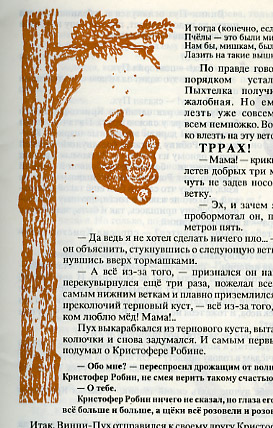 The Russian edition I've been browsing lately is now helping me reimagine Pooh even further, and got me wondering about how such characters become fixed in our minds in a certain style, and what it takes to break them out of that form and regain our perception of something more abstract which might truly interest us.
 Here, in the second story in the book, Rabbit entertains Pooh in his home prior to Pooh getting stuck in Rabbit's hole on the way out. In the Disney version of the stories all of the characters are heavily caricatured versions of those in the book, and the mean-spirited Rabbit takes to drawing on Pooh's rear end, if I remember correctly. In fact, this is one of the few Pooh stories (along with the bees and the balloon) used by Disney in the company's cartoons and videos.
 The things which tend to push me towards a hatred of Pooh are the things that Disney has done to him. I am a friend of Gemütlichkeit and the idyll of comfort, love, and total understanding that it promises. Such moments and experiences do exist, and they can be among the most important experiences of our lives. But when such things are turned into commodities, things always get ugly. At left we have the most extreme caricature Disney has come up with, from the live-action children's show The House At Pooh Corner, which I remember watching with my little sister back in the 1980s. Back then, I was just bored. Now, I see things, tragic things, in Pooh's face. The pinched, pained face of Pooh in this show reminds me of the freakish, post-plastic surgery Catherine O'Hara in For Your Consideration. The weathering of Pooh's visage - the theatrical revues of the 1930s, the shared inheritance of rights among multiple, entrepreneurial parties, the sellouts to Disney, the lawsuits - these have all been washed away, leaving a horrific hybrid between product and product packaging. This expression, this grimace - it is a death mask. This is the face of a character trapped in a kind of living death. He is a frozen image, begging for release.
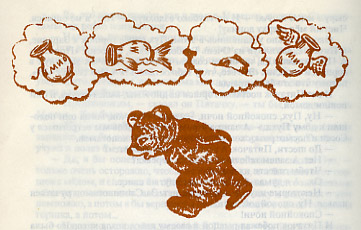 But I see this Russian Pooh, and I wonder if my hatred is misplaced.
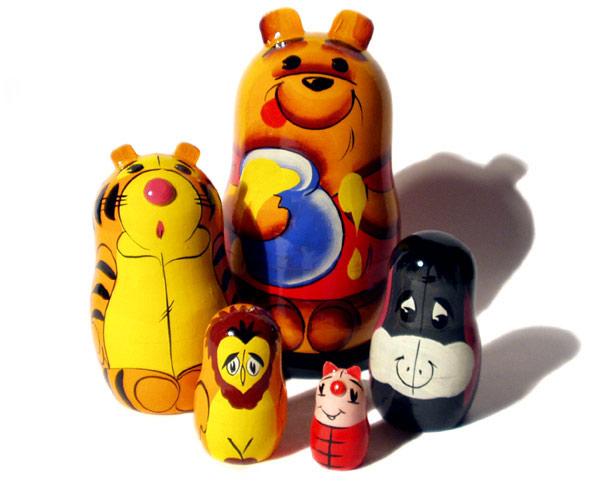 Winnie the Pooh has been quite popular in Russia. And unlike in the United States, no one exclusively owned the right to draw him. Above, Winnie the Pooh nesting dolls. Below, one of the popular Winnie the Pooh cartoons from Soviet animation powerhouse Soyuzmultfilm.
 But still, the Disney image remains. I can see these other figures while I look at them - examine them, even attempt to refresh my image of who Pooh might be by using them, following their lines, absorbing their colors. But when I turn away, this remains.
 Librarian and children's book literatus Elizabeth Bird reveals these gorgeous illustrations from what looks to be a gorgeous children's book. A single line in Laura Ljungkvisk's Follow the Line leads the eye on a twisted path through every page, defining and delineating the world as it goes. This is really the first relevant visual response to Harold and the Purple Crayon I've ever seen... and it only took fifty years! Head to Fuse #8 to see more.
Nestled lovingly in the bosom of the many "Best of 2006" lists released over the past week are critics' stabs at identifying some of the most outrageous worsts in their fields. Below are a few "worst-of " lists or list components relating to visual design.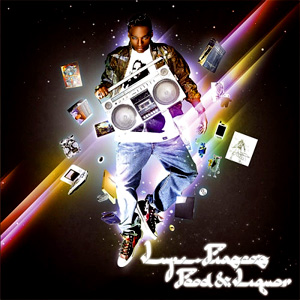 Music: Worst Album Covers Pitckfork Media's pick of the top 25 worst album covers had me sadly nodding my head over at their first pick - one of my favorite bands' worst pieces of cover art since Built to Spill was just a sparkle in Treepeople's eye. But it goes way, way downhill from there. One of my favorites, Lupe Fiasco's Food & Liquor, cuts out the annoying nuance of traditional bling assertion and shows us the products we've all been shopping for. NSFW and not for sensitive viewers.
Film: Worst Movie Posters
Short but sweet, Cinematical's list of the year's worst movie posters highlights advertising strategies destined to bomb.
Most Despicable Use of In-Game Advertising
Gamespot's Best/Worst of 2006 in computer games includes this juicy category for the many games that have chosen to push the envelope with in-your-face product placement and in-game billboard advertising.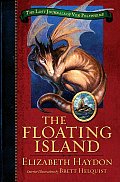 Worst (and Most Misleading) Young-Adult Book Covers
Fuse #8 is a bit kinder than that - or the task would be too hard if so defined - so she chose to include the best young-adult books with the worst covers, and also takes a passing swipe at major books with the most misleading ones, in her newly-inaugurated Golden Fuse Awards. My favorite in that category is at left. Number of dragons in the dragon-festooned The Floating Island? I'll let you guess.
Timeless Best/Worst Lists
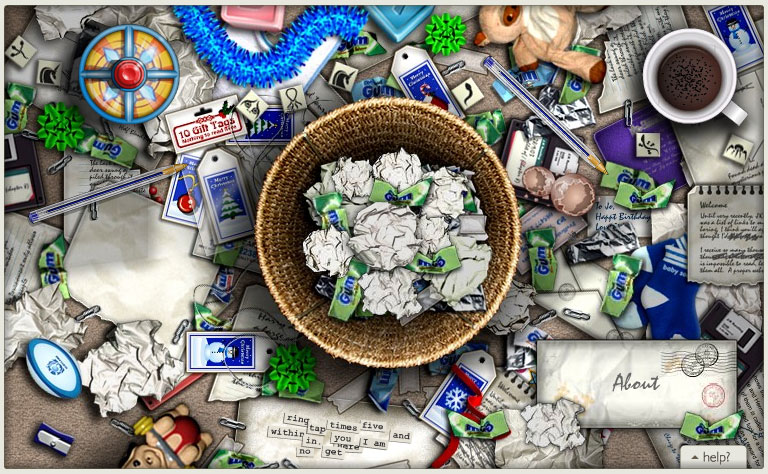 Fuse #8 reports on the availability of the title of the seventh Harry Potter book on J.K. Rowling's website. Title aside, I like the publisher's use of the site as a promotional vehicle. It takes several mysterious steps to get to the underwhelming title, and there are other goodies on the site as well. My favorite is the "Rubbish" section, accessible from the main desktop by clicking on the pencil sharpener; the trash can contains responses to critics of the Harry Potter books and debunkings of various myths surrouding the series or its author.
I'm guessing a lot of kids will be pretty jazzed at having the opportunity to find out the title through mysterious means, so I won't give it away here. But Fuse #8 can tell you the steps to take to find it.


