
The Case Against Jill Greenberg's "End Times"
If you'd prefer a satirical response to Greenberg's "End Times" addressed to the show's curator, Paul Kopeikin, see my Open Letter to Paul Kopeikin.
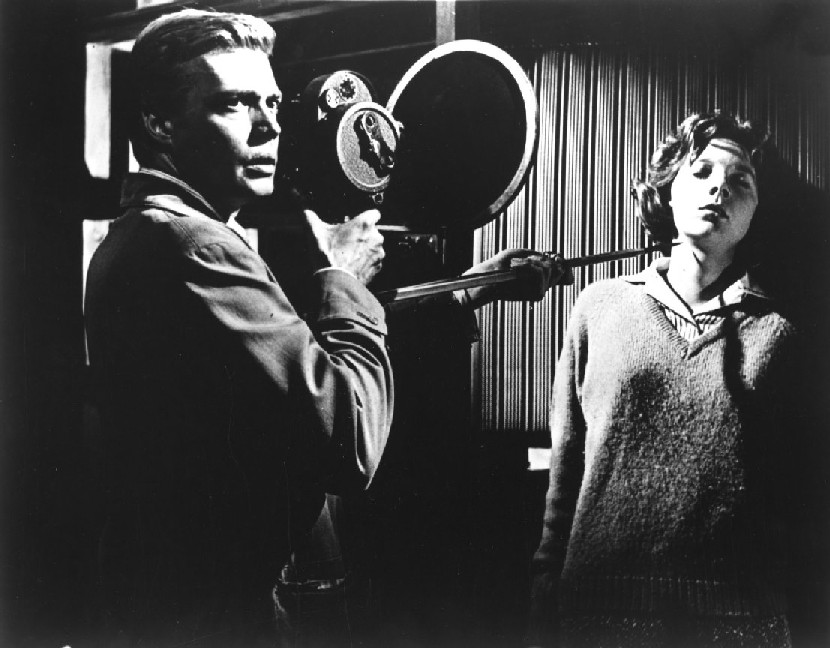
Instinct's a wonderful thing, isn't it, Mark? A pity it can't be photographed.
- Mrs. Stephens, Peeping Tom
- Mrs. Stephens, Peeping Tom
Thomas Hawk made me start a blogroll.
The author of "Thomas Hawk's Digital Connection", who works as an investment adviser and uses a pen name to keep his work and blogging lives distinct, has created an uproar with his commentary about photographer Jill Greenberg's current exhibition “End Times.”
From a distance, the passions it has aroused lead us directly to the archtypal story of an artist-visionary who stirs up the cultural pot by exploring a “taboo” subject and riding the cultural buzz to the bank, only to be canonized later by the art historical community, preferably within her lifetime, as having created something brave and forward-thinking that had tapped the cultural pulse as well as making the artist and her agent in the marketplace tons of money.
This is different.
Jill Greenberg, for anyone who has not yet noticed, is exhibiting a series of close-up portraits of children under three years of age who are miserably, frightfully upset. (You too can view them here.) Ms. Greenberg has claimed that she made the toddlers cry by giving them a lollipop and then taking it away, a standard method for drawing tears among the young in Hollywood. We can all agree that children get upset by things that we would deem trivial, that artists are masters of illusion, and that there is no reason to suspect physical abuse occurred when shooting these photographs. But it seems clear, to myself and to many others, many of us parents, that the project clearly involved provoking children to a level of duress that goes far beyond the norm. Greenberg's simple "lollipop" story has begun to unravel; in an interview with American Photo magazine for example, she describes how frustrating it was to have parents "step out of the studio for a couple minutes" in vain attempts to make children cry who would not otherwise oblige. (Click here for a podcast.) In short, the rage, fear, and sadness of the photographed children is palpable and raw, and the resulting images are powerful, heartbreaking, and, to many viewers, morally indefensible.
Thomas Hawk’s reaction to this work is of the kind one might be subjected to after kicking a dog on the street or verbally abusing a cowering child in a shopping mall: that is, with a rage that strains to reach out through the web and call attention to the perpetrator’s actions in a publicly humiliating way. His first, explosive post on the subject back in April, "Jill Greenberg Is A Sick Woman Who Should Be Arrested and Charged With Child Abuse," lacked the nuanced language and damning praise of high art criticism, and sidestepped the confused and uncertain reactions typical of the popular press. Although he is a prolific digital photographer and self-avowed "technology enthusiast," Hawk wasted no words on Greenberg's skillful lighting or pristine Photoshopping of her subjects' crystalline tears, shimmering wet eyes, or the exaggerated, rashlike blush on the skin achieved through harsh lighting and skillful post-process adjustments. What Thomas Hawk saw was not an aesthetic question, but a moral one. This has placed him in the awkward position of an artistic progressive acting as a censor. As he wrote in his opening volley:
The ethics of photography are by no means simple - shooting strangers, permissions, capturing pain and suffering, many different subjects require that photographers think through their ethics before coming up with the best way to make and display their work. There are a lot of gray areas and a lot of different opinions on many different areas of what should be captured and what should not be captured. I generally fall into the camp of just about anything ought to be ethical for capture assuming it's natural and the photographer is working as a witness, bystander, artist, photojournalist, citizen journalist, etc. But what Jill Greenberg is doing makes me want to throw up. And it shouldn't be allowed.The post is closing in on 150 comments to date, ranging from characterizations of Hawk as a lunatic to angry denunciations of his position to passionate agreement to relief that someone had spoken out. The effect of reading these comments is alternately agitating and mind-numbing, especially since they are crammed into the blog's comments section, a format poorly adapted to extended dialogue and rife with opportunities for miscommunication.
Defenders of Greenberg's work expressed a variety of objections and anxieties relating to Hawk's position, but throughout them all the blogger has developed and elaborated on his argument while gaining additional attention to his position. Since his original post, he has entertained accusations of libel from Greenberg's husband, Robert Green, read an interview with Greenberg in American Photo that quoted Hawk's blog but did not contact him to respond to untrue information about himself provided by the artist which served to discredit his position, and published four follow-up posts on the issue. The blog Boing-Boing brought many readers in the loop (including me) with their post a week ago, and several people in agreement with Hawk have written in to his blog regarding the status of calls to abuse-prevention agencies and media outlets demanding an investigation. Saturday's New York Times carried a brief about the controversy in its "What's Online" section (if you don't have an account, borrow one here).
The nature of this conflict, and one clue to its ongoing interest, is that many people recognize that this is something more than just another chapter in the ongoing Battle for Contemporary Art, in which progressive, urbane afficionadoes of challenging and complex artistic statements fend off naive or downright evil anti-art reactionaries. Of course, that doesn't stop many blog skimmers from assuming that's exactly what it is. To some, the debate over "End Times" is the same debate viewers had over Andres Serrano's "Piss Christ" or Robert Mapplethorpe's S&M nudes, and they hustle to the fray with standards raised. As one anonymous commenter wrote:
You can hassle us all you want under the guise of preventing terrorism or saving children, but what we do is something on a higher level. We're expressing those very rights of freedom in photographs as an example of why we can never let the conservative, right-wingers in this country get their way. It's amazing Bush and backwards-thinking goons haven't already tried to stop Jill Greenberg from enjoying her civil rights by locking her up in Guantanamo Bay. We are artists, and just because we don't think the same way you may think when it comes to artistic subjects such as photographs of children, it doesn't mean you can dictate the rules we live by.According to blogger Vern Gill, Robert Green brought the connection to the fore on his own blog, angrily defending his wife's work and declaring that Hawk "claims to be a lefty who has protested this that and the other thing, yet he uses tactics that would be all too familiar to Swift boat Veterans for Truth, the right wing nutbags." Curiously, his blog posts as they now appear jump from June 2 to June 27, the latter post offering only a cryptic expletive directed at Hawk and offering Hawk's real name. If Gill is telling the truth (and current comments graffitied in Green's own blog's suggest as much), Gill unwittingly preserved some words of Mr. Green's that the artist's husband later decided were better left unsaid. You can decide for yourself what Robert Green might have regretted committing to print by reading Gill's post here.
Most others who defended Greenberg's methods expressed a personal distaste for the series, particularly of her presentation of the photographs as a politically-charged expression of her own feelings about the Bush administration and the religious right's war on Islam. In her artist's statement for the show, Greenberg described how she felt when a child she was photographing in her studio burst into tears and helped spawn her Great Idea:
The first little boy I shot, Liam, suddenly became hysterically upset. It reminded me of helplessness and anger I feel about our current political and social situation. The most dangerous fundamentalists aren’t just waging war in Iraq; they’re attacking evolution, blocking medical research and ignoring the environment. It’s as if they believe the apocalyptic End Time is near, therefore protecting the earth and future of our children is futile."Greenberg's subject is taboo: children in pain," the Paul Kopeikin Gallery's press release confides, but while Kopeikin rightly senses that Greenberg is encroaching on a taboo, his interpretation of that taboo is dissimulative to the point of absurdity. As anyone with Paul Kopeikin's knowledge of photographic history is well aware, documentary photography (not to mention WorldVision infomercials) brought that challenging subject to our doorsteps long ago. Could it be that Jill's subject is "taboo" - or, to use a less scintillating term, "disgusting" - because we are aware of the real suffering children around the world experience, and to have it recreated snow-globe style reflects poor aesthetic and moral taste?
Perhaps the greatest irony of the work is Greenberg's overlaying of a political message, one preaching compassion and intelligence at that, to a process that involved the willful manipulation of toddlers to break down their toddler-sized psyches and leave them in a pool of their own tears. I agree with the artist and many others in this country in her assessment of the current administration in Washington. But Greenberg's own tactics are a mordant, grotesque "nursery-school version" of the most conspicuous of those same policies and practices. One anonymous commenter on Hawk's blog attempted to reconstruct what happened in Greenberg's studio, using only information she herself has made available regarding how she made "End Times" possible:
Forcibly making a child have an episode of tremendous anguish, as is indicated on their faces (these children are well beyond simply crying) is an act of abuse. She is abusing her power over them, as both an adult and what the child sees as a trusted friend to their parents. I doubt if she sat the children down and said “Ok here is what I am going to do. First, we will take off your clothes, then I will have you sit right over there. Next, my assistant here and I are going to do many things to get you to cry as hard as you have ever cried before. We will do that by having your parent leave the room, giving you some candy or a toy, and then grabbing it from you. We will do this over and over until you are crying good enough for me, and then these bright lights will flash over and over again, until I have a good enough picture. We will do this and there is nothing you can do to stop me. Thank you for your time and understanding, and participating in this historic event that is really a comment on my feelings towards the Bush administration. I am sorry we have to terrorize you like this, but you see, this is for the greater good. These pictures will make that bad man go away and stop hurting other children.”No, "End Times" is not Abu Ghraib, Guantanamo Bay, or even your average episode of 24. But I don't think anyone who has alluded to contemporary torture meant to imply an equivalence so much as a cleaner metaphorical link than the one Greenberg attempted to foist on her own work. Stripped of its purported conceptual framework, "End Times" is, above all else, a detached experiment in bullying, period. This fact makes it almost embarrassing to critique Greenberg's work on a deeper level, because it necessarily involves thinking things through more thoroughly than the "artist" herself seems inclined to do, prefering instead to assume that her instinctual response will hold up without further investigation and elaboration, grimly following her idea to its logical conclusion without recognizing how well she is mimicking her supposed enemy in her expression of concern for children. 1984, this one's for you.
Of course, while in politics, sunshine may be the best disinfectant, in the art world, sunlight and limelight are often one and the same. Many commenters have morosely (or gleefully) pointed out that this controversy may be the best thing that ever happened to Jill Greenberg's art career. Naturally, Greenberg and her agents have switched over to the spin cycle; her press release for her show at Los Angeles' Paul Kopeikin Gallery states that the work has "hit a national nerve" and explicitly linking this public discomfort with her hazy political message, and Kopeikin himself emailed Hawk to claim that the abuse controversy was a "non-isse" [sic] and that he had "made several sales to people who you have introduced to the work and who understand and appreciate it."
I believe that the moral dimension of "End Times" cannot be ignored, and that an artist need not profit from societal objections to their work if those objections are sound and widely shared. I further believe that Jill Greenberg's work should not be viewed through the art-historical lens of edgy, contemporary art, but is instead a cultural hiccup that should be shelved with divisive cultural artifacts like black minstrelry, art involving the physical abuse of animals, and other works that reflect a sensibility so alien that it is better approached not as art, but as the fractured product of a diseased mind or a necrotic culture.
I think the best response to any travesty of this nature is careful critique supplanted by outright mockery. Someone out there may prove otherwise, but I think that Child Welfare Services has no applicable standard for judging what Greenberg has done, that Paul Kopeikin really believes that hate mail means he has truly arrived, and that any pain Jill Greenberg suffers from your calls and letters could easily be "expressed" in an equally repugnant new series of work. My personal and untested opinion is that the only way to stop this kind of practice is to laugh it off the public stage. The art itself will die without too much help from us.
Related Posts:
- Jill Greenberg and the Short, Fat Tail
- An Open Letter to Paul Kopeikin
- Welcome To The Internet, Paul Kopeikin! Here Are A Few Things You Should Know.
- Worried Monkey Stays Home


50 comments:
First off, let me say thank you. Thank you for the link, but also thank you for a well thought out post. It was a good read.
The portion of the post in which you referred to me appears incorrectly on my computer in both FireFox and IE. I believe the offending text is the spans in the blockquote;
< span class="item-control admin-1268888013 pid-2098695313" > < span class="delete-comment-icon" >
It appeasrs like this;
According to blogger Vern Gill, Robert Green Most others who defended Greenberg's methods expressed a personal distaste for
Anyway, thanks again!
Fixed it. Thanks for the note, Vern.
Thank you for your well thought out and considered discussion on this topic. I've been following "Thomas Hawk's" discussion on this for a while. Jill Greenburg's rationale reeks of mental masturbation, well knowing what she is doing is morally reprehensive. I 've seen th epictures and it does strike a chord deep inside me. I'm normally quite an equinanimous person, and I think, quite tolerant of a wide variety of opinions and views of the world, but I feel nothing but utter disgust and anger towards her. Children are fairly adaptable and robust beings, but traumatic things can leave deep scars, especially when they don't understand what is happening.
Jeremiah,
Thank you for the wonderful post. Very well thought out and portrayed. I also appreciate being mentioned because of some posts I made to Thomas's blog on the subject. One correction though. You attributed this "Forcibly making a child have an episode of tremendous anguish, as is indicated on their faces (these children are well beyond simply crying)..." to an anonymous poster, when in fact I wrote it. Its no big deal...just thought you'd like to know.
Anyway, happy blogging and thanks again for presenting the issue clearly.
John,
I assumed that the name "John Hancock" was not your real name. Sorry for any confusion.
You are correct, sir. As posted on the original blog, "About the poster: I am a 47 year old white male, father and primary caregiver of a 9 year old daughter. Politically I am on the far left and have put my body on the line, and been arrested, on issues ranging from nuclear plants (Diablo Canyon) and weapons design (Lawrence Livermore and Sandia National weapons labs), to violence against women issues to the support of abortion rights. I am an artist, and have been in the photography business for over 25 years professionally, and 35 years all together. Primarily I do fine art black and white printing and my prints have been in museums and galleries all over the world. I choose not to use my name here because of the obvious reasons. I don’t need to get spammed to death, nor do I wish to become some whipping boy for people who can’t really fathom the issue being discussed here. However, that does not diminish the opinions I gave, or the reality checks I pointed out. To say so otherwise is just plain dumb. If we lived in a society that could handle such discussions without knee jerk and abusive reactions, I would gladly publish my real name. But when we live in a society that seems to be ok with a trusted adult purposefully terrorizing a child and inflicting emotional trauma on that child for the sake of a photograph, and trying to hang some political justification on it to make it “ok”, there is just no way that any sane person would publish their name and subject themselves to the hate emails that would certainly come."
Unfortunatly I have to keep my name off as many email lists as possible. I already receive over 200 spam emails a day, and it is overwhelming me trying to sort thru them to get to the legit emails. Anymore and I would have to change my name, which is my domain name and email address, all together. Thomas knows who I am, as I wrote to him shortly after my first post. If you feel the need, I would tell you also, but in a direct email and with yur word yuo would not publish it. I believe in sticking up for what is right and what I believe in, but that does not make me a fool and subject myself to the unneeded hassles of more spam. Personal attacks sent thru email don't bother me, but the thought of 400+ spam email a day does.
I've been fascinated by this debate, albeit pretty much a one-sided one, since I first stumbled on to it. I appreciated your thoughtful post.
I don't believe the lollipop story - which really is bad enough. She had to have done more. Those are not the faces of a a rage or tantrum -- those faces are full of fear. If she really wants to document the pain that the adminstration's policies are inflicting on people, there are many, many sad subjects to choose from.
I think it's interesting how bloggers, such as yourself, are conveniently using this issue to frame/push your own "moral" adgenda.
In a way, you're re-framing Jill's work....a means of co-opting her message, and re-framing it as your own.
I'd point out a handful of ironies in your post, but after reading your work, i'm afraid it would be lost on you.
Truth be told, Jill's work has stirred something dark and ugly in yourself - your "I'm taking the moral high ground" narrative makes that very clear. Your response (and Thomas "Look at this big cross I've nailed myself to" Hawk's) speak directly to your own personal issues. Again, that you've framed your responses from a moral standpoint only underscores how uncomfortable you are dealing with your reaction in any other context.
More truth be told, there have *got* to be things in this world far more deserving of your attention and scorn than Jill Greenberg, who's career will go on with or without your opinions.
"Again, that you've framed your responses from a moral standpoint..."
And why shouldn't this be about morals? That is the whole point. By an adult, who the parents have brought their children to and the children not having any say so in the matter, forcing emotional distress on 3 year olds for a photo and $4,500, it is obvious she is morally bankrupt.
And it seems you are also.
Silly Anonymous said:
"In a way, you're re-framing Jill's work....a means of co-opting her message, and re-framing it as your own."
Silly Person, Jeremiah has declared a very straightforward objection to Jill Greenberg's work. He has done so in prose, in commentary -- not in art. You do not need to read between the lines, parse, or squint to see what he's saying. There is no frame.
There's a lot more silliness in your post, but just chew on that much for now.
Isn't it interesting that, of ALL of the "don't you losers have better things to worry/bitch about" type comments, ALL of them have been Anonymous.
Losers.
Yeah, that IS telling, isn't it?
Nice job. I am a left-of-left liberal who has found Greenberg's attempt to cast this cloying and mediorcre work in a political light laugable. This is the kind of shrill, inane, and hysterical gibberish that undermines our attempts to get Bush and his cronies out power. It is truly an embarassment to have people like this in our camp.
I'm not anonymous, so allow me to second the emotion that you people DO need to find something else to do with your time, and that there ARE far more pressing issues out there.
Many of you who are most critical of Greenberg are yourselves artists. If she goes to jail, why shouldn't you be next? What's that you say? YOU'RE not doing anything immoral or morally bankrupt or possibly illegal?? Well guess what? The law being the slippery slope that it is, some yutz somewhere might decide that, in fact, your stuff IS worthy of legal sanction. Then you will be hoisted by your own petard, and rightfully so.
The problem is that every other artist in the country will be screwed as well. And that makes your odious opinions everybody's problem.
Rob, the problem with your argument is thus; what Jill has done is likely illegal already. It's not merely a matter of opinion.
This is not some art piece that is of questionable legality used solely for political or social expression. This is a pathetic attempt to use children to display her anger and frustration. How much damage has she done in the process?
Furthermore, while you may think this is a step down an inevitable path that leads to further criminality of art, I think you'll find that has hardly been the case.
Do you recall Robert Mapplethorpe?
'The 1990 exhibition of his The Perfect Moment show (which included seven sadomasochistic portraits) in Cincinnati resulted in the unsuccessful prosecution of the Cincinnati Contemporary Arts Center and its director Dennis Barrie on charges of "pandering obscenity".'
While his art was certainly raw, it was not necessarily psychologically destructive to the subjects, all of whom were og an age to make a decision FOR THEMSELVES about the nature and purpose of the works.
Jill Greenberg is a sick woman. Period.
And if she goes to jail, it will be her fault. Not the fault of those who feel she did a wrong.
no, vern, it wasn't illegal.
It has been stated several times that most of the kids were models, and the methods used to make them cry were hollywood's and TV's usual and approved ones. On the face of it, she did *nothing* illegal.
If you don't believe that, well, file a complain, petition the children petition service to investigate, whatever, but just saying "this is illegal and this woman is sick" won't make it so.
Oh, my the knee-jerk gut reactions from the tut-tut crowd.
Fascinating, I would compare you to the myopic pro-life protesters shoving fetus pictures in people's faces. Like George Bush, you are thinking with your guts, most of you, without looking at the larger context of the artwork. Isn't it possible that this work, by provoking debate and awareness, might actually cause more good than the temporary harm to the toddlers?
Most of you should know (or ought to) that you can expect a crying fit like those shown in the pictures almost every day with a toddler. I know - I see it about every 2nd time I go to the local coffee shop and some poor parent has to tell their kids that they're going to need to stop playing with the toys.
Kids are starving to death, living in filth, and dieing from disease every day and every second -- you and I know this and yet choose to ignore it. Yet someone shows a bit of toddler crying and you throw a fit.
Get over it. If you can't then go
1) donate to the hunger site or appropriate 3rd world charity
2) do something nice for a local kid
"vive lame"? What a handle.
Anyway, I never actually said what she did was illegal.
Please note;
"what Jill has done is likely illegal already"
Not the same thing.
Also "On the face of it, she did *nothing* illegal." kinda sounds like you don't know. And if you don't know, the STFU.
Yet another anonymous commenter in the "get over it" crowd. Surprising, I'm sure.
"Most of you should know (or ought to) that you can expect a crying fit like those shown in the pictures almost every day with a toddler. I know - I see it about every 2nd time I go to the local coffee shop and some poor parent has to tell their kids that they're going to need to stop playing with the toys."
Listen, I am a parent. I am quite familiar with tantrums. I am also familiar with what you can do to make children cry.
This is not a question of whether children cry. This is not a question of whether what she did to make them cry was illegal or immoral.
This is a simple matter of Jill Greenberg doing what she did being of questionable motive or value, and at what expense.
Oh, and this;
"Kids are starving to death, living in filth, and dieing from disease every day and every second -- you and I know this and yet choose to ignore it. Yet someone shows a bit of toddler crying and you throw a fit.
Get over it. If you can't then go
1) donate to the hunger site or appropriate 3rd world charity
2) do something nice for a local kid"
Don't presume to know that, since I am passionate about this issue, I don't participate in eliminating hunger or helping local children.
Moreover, don't fool yourself into thinking that it matters whether or not I do those things.
Nicely stated svolich.
If I separate the art from the interviews, etc, the images remind me of images of Christ weeping that I saw when I lived in Greece. Independent of the controversy in print, independent of any explanations from the artist, they make me think of the way we idealize childrens' grief, and the similarities between the way religions romanticize a martyr. To me, that's an interesting commentary.
However, these are photographs, not velvet paintings - so I guess the question of how the children were treated becomes central, doesn't it? As as parent, I respond emotionally to the childrens' grief - something tells me an injustice has been done. I expect this response was the artist's intent. Whether she elicited the tears injustly or by some moral trick (which allows us to be "okay" with the act) becomes the lever by which the work is rendered acceptable or unacceptable. While I feel that the political message she chose to associate with the childrens' tears was shallow compared to the depth of grief portrayed, I consider this is a matter of personal preference for me and choose to separate it from any judgment I might feel about her means.
I've never been comfortable with any kind of public humiliation inflicted on individuals by the many, even when the individual was originally in the wrong. Perhaps this stems from my own fear of public humiliation. Who knows? Nevertheless, the childrens' tears remind me of this discomfort, and I think that's a good thing.
I guess I feel that the work is powerful, though for reasons that render the artist's stated motivations, and the machinations of the blogosphere, ironic.
After reading the "well thought out posts", I feel compelled to comment.
I think Greenberg's photos are beautiful. I certainly don't see the extreme abuse that some do. I've seen similar toddler-faces in check-out lanes of grocery stores as they express their need for a sugary-treat or toy.
Ask any mother who has lovingly experienced a visit to one of the many nationally recognized photo studios across the country and I'm certain she will say she has seen similar toddler-faces there. I know I have - on my own son. He's now 30 - and suffers no emotonal scars from it.
Much to do about nothing? I think so. Great art Greenberg! Are the photos real and raw? You bet. Damaging? Not so much.
I'm just going to expand on a comment someone said on Thomas Hawks site I read earlier. If Jill Greenberg had tried to elicit the same responses from those monkeys she photographed in her earlier show..the owners and the public probably would not have allowed it..we would have been outraged saying "You can't provoke or harrass poor harmless monkeys to make money for art!" I think almost everyone (cept a few seriously sick people) would have gotten together and agreed on that.
yet there are people defending her doing just that to children.. weird
Daniel Krieger
On the web, anyone can say anything about anybody. How then, should I incorporate statements about an artist's personality in trying to form a holistic understanding of art presented on the web?
The artist, Jill Greenberg, has a character, which has been described in other comments as very manipulative. But she represents only 33% of the chain of ownership of an idea that begins with the artist, then manifests itself unexplainably in a material object (as if such a thing were possible), and is reborn like the buddha in the mind of the viewer.
So here are my points:
1. The process of artistic creation includes both artist and viewer.
2. I can't independently verify the authenticity of the artist's part of the process.
3. Can it still be art if the possibility exists that the artist's part of the process was completely inauthentic?
4. If no, how can anything be art if viewed independent of its context on the web?
5. I think it CAN still be art, and the web places more emphasis on the viewer's part of the process than was the case in the past, when "who created it" might have been a clearer indication of whether it was art.
Thank you for articulating what my insides are too appaled to sound out. The world is indeed filled with horrible sights and deeds. And no amount of political or artistic posturing can change the fact that Ms Greenberg has contributed more to the count.
I wish I had not ever seen these images.
Hmmm I admire Greenberg, well done
AMERICA!!!
GET A LIFE!!
AREN'T THERE ARE MORE IMPORTANT ISSUES IN THE WORLD TO DEBATE ABOUT????
So now republicans care about "torture"? yawn.
Desperate for celebrity is she.
She hasn't anything to offer so she must contrive inspiration to gain VIP entrance to the narcissist's shallow club Celebrity.
No wonder Art is dead.
The modern poet killed Shakespeare just to be seen a celebrity star.
If I wanted to conduct a psychological experiment on children, such as the one Greenberg did I would never see it approved. So we should assume that ethics do not fall in the art community as it does in all other areas? I am not advocating that she should be banned but her supporters should wonder if there is anything that isn't art. Emotional manipulation of children for your own ego and satisfaction is appalling and unethical. I am disappointed that as long as you call it art you get a pass.
"It is truly an embarassment to have people like this in our camp."
You should be outraged reagardless of camp affiliation.
Reading through the rest of the cxomments it's apparent that not enough in your camp are even embarassed.
The art is so-so. Making kids cry is nothing, but every decent parent does it on a regular basis. (Kids will cry if they don't get their way.) My toddler does not remember this morning's horrible trauma about not having a clean blue shirt to wear & having to wear a red one. And yet, he cried and wailed as if tortured.
But my real objection is to the fact that the ranters compared taking these photos to the maiming of children in Sierra Leone. That's just idiotic. It makes me lose any respect I would have for their opinion.
outragedchick: "So forget about the freakin' politics and think about how you would feel holding a crying baby unable to stop it from crying and realize that the child is innocent and being used for someone else's gain."
Apply that logic to the mother of the latest slain soldier. Maybe not innocent (not making judgements, making a point) but definitely being used for someone else's gain.
Anonymous poster number 32: "Making kids cry is nothing, but every decent parent does it on a regular basis."
You are correct, but there is a difference. Parents can and do make their children cry BUT NOT FOR PROFIT AND FAME!!!!
Do you see the distinction?
These photos are nonsensical because they are untruthful. These kids are not crying about politics, they are being teased. The real caption should read "Teased because ideology is photog's religion." Even most of the "get over it" comments interject politics in a nasty way.
"You can hassle us all you want under the guise of preventing terrorism or saving children, but what we do is something on a higher level. We're expressing those very rights of freedom in photographs as an example of why we can never let the conservative, right-wingers in this country get their way. It's amazing Bush and backwards-thinking goons haven't already tried to stop Jill Greenberg from enjoying her civil rights by locking her up in Guantanamo Bay. We are artists, and just because we don't think the same way you may think when it comes to artistic subjects such as photographs of children, it doesn't mean you can dictate the rules we live by. "
That is some of the most pretentious, self-important tripe I have ever read. Get real. I hate to break this to, but you guys aren't that important. You're not going to affect the mass of public opinion, or even those of policy makers in that significant a way. Artists tend to give themselves way more credit than they deserve for social or cultural change, artists ride the cresting wave, you don't start it.
There's nothing heroic or commendable in what Greenberg dide. I think Hawk could have tones down his rhetoric some, but I can't really say that it breaks my heart to see her taken down a peg or two.
Disgusting.
And the humiliation won't end there. Some years later, when the kid is old enough to read and remember things, he or she will come across their picture on the Internet, where there's a permanent record of it.
And if their mommies or daddies were enthusiastic enablers now, just what are they going to be like then, when they're cooing over these grotesque pics with their friends in front of their children: "Oh look, there you are, all of two years old... so cute, just look how you acted when she took your lollipop away... you cried and cried... you always did have a problem with people taking stuff away from you, you always were a selfish kid... but you're famous for it now, so it all worked out in the end... this is a work of art now, it's called 'Four More Years', how appropriate. F---in' Bush! That picture of you really did capture how a lot of us were feeling at the time..."
"???"
"Oh don't get bent out of shape... once she was done she handed you a whole bunch of lollipops and you were fine after that, you forgot all about it. I was there, I saw it... now don't bother me any more about this, you're being too sensitive, you always were..."
The photographer is sick. But the betrayal by the parent is unbelievable, and won't be complete until the children are older.
I hope some parents get it and apologize to their kids for this when they're old enough.
why is this controversial at all? if people have become so spineless as to actually believe this is "child abuse", we're doomed.
I posted this on the T. Hawk and will post the same here:
Go to your local playground, strip a child down, and taunt the child until he/she cries.
E-mail back to this site after you post bail !
Richard
You all think you could be a better president than Bush, go ahead and run for the next election since the world is doomed with Bush in office.
Oh and by the way VERN just because I'm "conservative" does not mean I am pro war! I have relatives fighting in the Iraqi war. Yes I sympathize with the mothers with sons in war, but that is a false analogy comparing them to children having candy stripped from their hands. And for goodness sakes the people who enlisted in the war know there is a possibiltity they will die and probably keep their head held high till the end.
See we can't even talk about kids without having to bring Bush's mistakes of warfare into it.
nephesh said...
"why is this controversial at all? if people have become so spineless as to actually believe this is "child abuse", we're doomed."
In a sense.. it is abuse. But since you think that it is so trivial... Perhaps someone should make you bawl your eyes out... a few times a day... for the rest of your life…
If it's no big deal that is.
nephesh: Spineless?
It's now spineless to consider someone manipulating children for their own profit and fame, possibly to an excessive degree, spineless?
Kinda seems to me like spineless would better suit someone willing to use children for their "political" statement than to actually say what they mean.
Spineless also seems better suited to someone unwilling to call Jill for her bulls&*t than for those who actually point out that what she did was at a minimum questionable if not downright criminal.
Perhaps you should re-evaluate your standards...
Michael: That was the longest and most incoherent and detached view of this whole ordeal I have seen yet.
You immediately intimate that you are uniquely qualified to both empathize AND reach a reasonable conclusion, as if no others are.
You then indicate that while some people may find this work offensice, they must OBVIOUSLY be wrong, as they only focus on what the children may have gone through, and ignore the reality that works derived from cruel acts should immediately be shunned.
You go on to tell us poor souls lacking your devine insight that the parents of the children got them into something knowing well what that something might be, as if that would somehow excuse both their and Jill's behavior.
Even better, you tell us that obviously Jill's brad of cruelty is paltry compared to any other traumas we might experience, and as such, should be overlooked or outrightly fogiven.
You finish the first part of your diatribe with some story about how the little boy has become materialistic and should shut up about the five or ten mintues of pain endured at the hands of mommy dearest.
Get. Over. Your. Self.
This is a pure and simple case of Jill USING and ABUSING THESE CHILDREN for NOTHING MORE than PROFIT AND FAME!
The parents ARE to blame. Jill IS to blame! Robert Green IS to blame. Paul Kopeikin IS to blame!
Your second treatise goes on to tell us that Jill is to commended, despite the possibility that she cause irreparable damage to some of these children stricly for a dollar. (Or $4000)
You gently inform us neophytes that we, as adults, must surely act out and just as expressively as these children did during their ordeal, and we must obviously overlook this little tantrum in the interest of fairness.
Following this blunt realization of our shortcomings we are now informed that we as adults, in order to carry on a conversation, must surely "bribe" and manipulate our child to get our way, and that this somehow teaches the child that this is, to quote, a positive.
So then, because we are prone to manipulation of our children, we must accept that the harsh reality is that we must sacrifice our children's wishes to chase that ever-important dollar, and to agan quote; Damned what the kid says.
You ask if Jill's action are unjust in comparison to (it would seem) a parent trying to provide for his/her family.
Obviously I will answer with a definite yes. But, according to you, that's obviously the wrong answer.
Somehow we are to accept that only digital manipulation could possibly show the extreme emotions shown on these children's faces. And, if we accept that faulty premise, you tell us that those expressions of emotion are simply reminders of our own futility. But, as you explain, more importantly, we are powerless in the face of the government's power. But, obviously, there is nothing we can do about that feeling of futility and powerlessness. As such, this idiot women's "art" is just reminding us, AGAIN, of our own futility and uselessness. And if we repulsion then she has accomplished her goal of reminding us of our own futility.
The overriding point you miss is this;
this "work" doesn't remind me of anything but brutality. Not the type of brutality that this government plays out on the citizens of this country daily with our ever-more limited freedoms and ever-less privacy, but the kind of brutality being played out on those in Guantanamo Bay or in Isreal and Lebanon.
Physical pain. Emotional pain.
Trauma.
Lasting, scarring, lifelong agony. Because of what was done to you. Not what you chose to experience, but what you were put through.
It's not about grief and crushed desires. Those are petty compared to the lasting image of a parent forcing a child to endure trauma for the BMW.
There is no brilliance in this subject matter. There is only ignorance.
Growth. Obstacles. Hope. Not covered in this "art".
Only pain.
Inexcusable pain.
A child's pain.
First of all, I'm posting as anonymous because I no longer have a Blogger account -- check the bottom for my name... if you can endure this long post.
I am an artist and find Greenberg's pictures to be a resounding, "eh". Technically, they're pretty nice. Artistically, they're just sad attempt at shock -- like much of the art produced today.
The negative response that many are having is exactly what the photographer wanted you to have. Congrats to those of you who have unleashed anger and resentment and Social Services -- reach around and pat yourselves on the back for falling into exactly what Greenberg wanted you to fall into. I know what Greenberg is thinking: "...like stealing candy from a baby..."
Greenberg knows that she hasn't broken any laws and had permission from the parents to do this -- why didn't the parents just pick up their children and walk out? She separated the parents from the children? Well, the parent has ~some~ responsibility there, now don't they? They should have just left with their child if they sniffed anything wrong. Honestly, I don't care if there were lollipops or not -- the parents were there and if something smelled fishy, they should have pulled their children out of there. End of story.
You know, I was a child model. Does anyone remember the "Boy Meets Girl" piece in the book Free to Be You & Me? Well, I was the baby on the left pages of that piece. They apparently made me cry for one of the shots by taking my pacifier or bottle away. Oooo! Child abuse! Puleeze. So everytime a parent takes something away from their child and that child has a complete conniption it's child abuse? When I was an art teacher, I was around many hysterical children who cried far harder over far less than a freaking lollipop. Children want things they can't have all the time. Are we supposed to give children whatever they want now? This mentality from the right? I find it rather ironic that many of these people who are against Greenberg's work are admitted staunch Republicans and support the war in Iraq. So, it's okay to bomb civilians, but, god- (sorry God-) forbid if someone takes a freaking lollipop from a baby?! The hypocrisy is astounding.
No one here knows for certain what Greenberg did to get those kids to cry like that, and I haven't read or heard anything from any of the parents that had their children's picture taken by Greenberg. Believe me, if Greenberg did things that equate to what we're doing to supposed terrorists in Gitmo, I'll be there next to you, demanding impeac... er, arrest.
Kevin Doyle
Can we just agree that if you have children, you have issue with Greenburg's series, and if you don't, you don't? That sure seems to be the case to me.
Frankly, I'm tired of reading the comments about Greenberg's tactics for making her art. We are all guilty of callous acts. Any of you eat veal or any meat for that matter? Definitely torture involved in most production of said sustinance. Ever spanked your child? Buy clothes from Walmart or other bargain outlet that has used child labor and/or sweatshop labor overseas? Ignorance is bliss. What am I getting at? As many people have mentioned, there is little actual, lasting trauma to be had with a child's crying episode like that portrayed. We are part of far worse cruelty (knowingly or not) on a daily basis.
As to the work. All this attention to Greenberg's work shows that shocking art is often uncomfortable, grabs most people's attention (and rarely stands the test of time as great art in my opinion). Greenberg's work is no different. It should come as no surprise that she is also a commercial photographer. This series of crying children reflect her graphic, in your face sensibility that many commercial photogs use to get your attention in the marketplace. It's working, for now. As an artist (I am), could I do what she is doing? No. I can't stomach children crying, especially my own. Not even for art. But I don't condemn her for doing it. I do find the work too easy as far as images go. Shock is easy. I also think it is somewhat clumsy as a political message. Art is rarely good at politics, design works better. Maybe she should have created ads instead?
The ultimate irony in this debate is that we have all been a part of her art by joining in the debate. Thus creating an aura and import around the work where none existed. (Controversy sells) I find the debate more interesting than the art or Greenberg's process in making it, and more important as well.
Jeremiah, I forgot to add that I think your writing is eloquent and thoughtful. Now I only wish you'd put that talent towards a subject worthy of that talent and attention to detail. This "controversy" isn't that important. Read comments from the parents on Hawk's site and you'll get the real "scoop". Here's an excerpt from one parent whose child had their photo taken by Ms. Greenberg:
"I showed her her picture again tonight and she said, "I like being in the pictures", I asked her if she even likes to be in the pictures when she is crying, and she said, "yes mama, let's go make a cake now!" She has much more important things to think about and she's not even 3, why don't you!?!" That's enough for me as well, I have more important things to do.
I think you should take a long hard look at yourself and ask why you have devoted all this time and energy to the unecessary suffering of a few spoilt american brats.
Where is your fury over the images flooding our televisions every day of the thousands of children disfigured or dying as a result of US ordinance used upon civilians in Gaza or Lebanon ?
There are millions of children out there dying of starvation and preventable diseases, why not jail the political leaders in this world for that ?
The "End Times" collection doesn't make me sick, its the indifference of people that makes me sick. If these images wake up even a small percentage of the population and resensitizes them to images they see of children REALLY suffering, the work done by Jill will truely be righteous.
I am continually amazed at how much some defenders of "End Times" are prepared to assume about my opinions on other matters. How can I be accused of insensitivity to other areas of moral concern because I specifically point one out on my blog, yet do not discuss war, famine, child slavery, et. all in the same breath, or instead of those areas of moral concern that I find it interesting to write about?
This is a blog about imagery and what we learn from it. Whenever politics enters into the mix, I'm there. But I cannot count the number of times I have been counseled to take a "long, hard look" at myself, Anonymous. How do you presume to have any inkling of how many long, hard looks I have or have not taken?
In stark contrast to comments like yours, it is encouraging to see how many good dialogues have come along on this topic since the initial furor has died down. Most of these have been on photography forums, and guess what? Most of the threads I have seen think "End Times" is a sham. I bet you'd even find a few people in that group who care about the "disfigured and dying" of the world. Or maybe a lot.
I think I've made my own position on Jill Greenberg's work quite clear, but I do occasionally find another's voice to state things better than I can at this late date. Zenit_b wrote today on the Digital Photography Review's forums:
for those posters (without children) who are asking "where do you draw the line ?" let me spell it out for you. As a parent you never do anything to deliberately harm your child, physically or mentally. This is part of your natural "wiring" as a normal parent. Even animals have this instinct - unless someone takes their young from them and they lose the bond. Sometimes difficult things which will cause short term pain have to be done. Stitches is a classic example - with a toddler this is an extremely stressful experience for the parents. The point though is that it had to done for the childs own good.
This woman crosses a very obvious and easily discernable line - these children did not have to be upset.
Comments like hers make me wonder why I had to use so many words to explain my own views. Time and again, people like Zenit_b have said all that needed saying. But I'm just tired of seeing us have to repeat ourselves on my own blog, so I'll be closing comments as of now on this and my other posts about Jill Greenberg's "End Times."
By the way, you can find the above-quoted comment on this site. If you are interested enough in topics like this to join a community and engage in dialogue rather than posting anonymously on two-month-old blog posts, this would be one great place to start.
Post a Comment